
Night on the Galactic Railroad
A posthumous fantasy novel about a celestial train journey.

グループ・タック · CC BY 3.0
Kenji Miyazawa’s fantasy novel *Night on the Galactic Railroad* (also known as *Milky Way Railroad*, *Night Train to the Stars*, or *Fantasy Railroad in the Stars*) was composed around 1927. It spans nine chapters and was released after the author’s death, in 1934, by Bunpodō as part of the third volume of his complete works. Scholars recognize four surviving versions of the text; the final draft is the one best known to Japanese audiences. The story has been turned into a 1985 anime film, along with several comic adaptations, stage musicals, and plays.
The plot follows Giovanni, a lonely boy whose mother is bedridden and whose father is either away on a long fishing trip or serving a prison sentence. To help buy food, Giovanni works odd jobs after school—such as assisting a typesetter at a print shop—while his sister also contributes. His classmates often mock him for once claiming his father would return soon with an otter-skin coat. During a science lesson, the teacher asks what the Milky Way is made of. Giovanni knows the answer from reading at the home of his only friend, Campanella, but is too shy to speak. When called on, Campanella also stays silent to spare Giovanni embarrassment. That evening, the other children prepare for a star festival. Giovanni learns his family didn’t get their milk delivery, so he heads to the dairy for his mother. An elderly woman there tells him to come back later. He runs into his classmates, who taunt him again; Campanella gives him a sympathetic look. Giovanni then climbs a nearby hill alone and lies at the base of a weather wheel. Gazing at the Milky Way, he suddenly finds himself with Campanella aboard a steam train traveling through the stars.
The train passes the Northern Cross and other celestial landmarks, making several stops. A ticket inspector checks their passes: Campanella and the other passengers show theirs, while Giovanni offers a piece of paper from his pocket. It turns out to be a rare ticket allowing the holder to go anywhere on the line. The two boys witness extraordinary scenes—scholars digging fossils from white crystal sands, a man catching herons and selling them as sweets, and passengers from the Titanic. A child recounts the story of Scorpio: a scorpion that preyed on insects fled from a weasel, fell into a well, and regretted not sacrificing itself to feed the weasel. It vowed to serve others
- author
- Kenji Miyazawa
- written_around
- 1927
- first_published
- 1934
- publisher
- Bunpodō
- original_language
- Japanese
- genre
- Fantasy novel
- known_for
- Last version most famous among Japanese readers
Lore & Background
The story follows Giovanni, a lonely boy whose mother is bedridden and whose father is said to be either away on a long fishing trip or serving a prison sentence. After being mocked by classmates, Giovanni goes alone to a hilltop and finds himself with his friend Campanella on a steam train traveling through the Milky Way. They meet various passengers, including scholars, a heron seller, and survivors of the Titanic. A child recounts the story of Scorpio, who vowed to sacrifice itself for others. At the Southern Cross, other passengers disembark for heaven, leaving only Giovanni and Campanella. As the train approaches Coalsack, Campanella sees his mother in a meadow and vanishes, leaving Giovanni weeping. Giovanni wakes on the hilltop and learns that Campanella drowned while saving another boy.
Reader's Guide
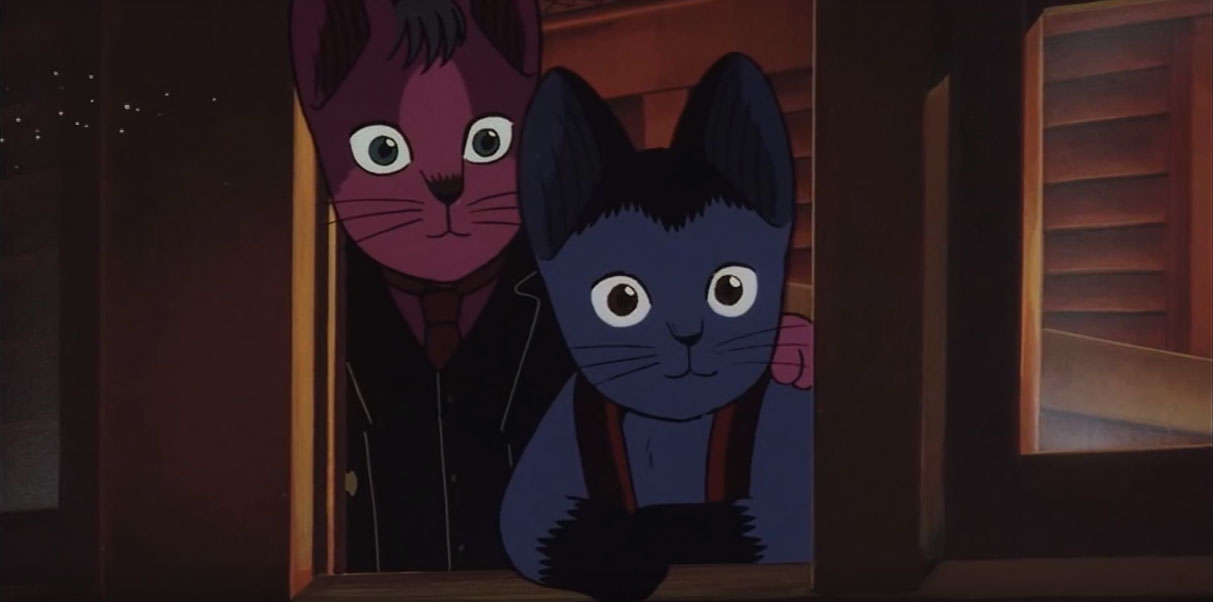
Night on the Galactic Railroad is a cornerstone of Japanese literature, reflecting Kenji Miyazawa's philosophy of self-sacrifice, a theme appearing in many of his juvenile novels. The work was inspired by Miyazawa's railroad trip to Karafuto after his sister Toshi's death in 1922, and he continued polishing it until his death in 1933. The middle part was never completed but was published as is. The novel's influence extends across media: it inspired Leiji Matsumoto's manga Galaxy Express 999, was adapted into a 1985 anime film with anthropomorphic cats, and has been referenced in works such as Revolutionary Girl Utena, Doraemon, and Shaman King. A real train line in the Tōhoku region, the Iwate Galaxy Railway Line, shares its name. The story's exploration of sacrifice, friendship, and the afterlife continues to resonate with readers and creators.
Did You Know?
- Four versions of the novel are known to exist, with the last one being the most famous among Japanese readers.
- The novel was posthumously published in 1934 as part of Complete Works of Kenji Miyazawa Vol. 3.
- The 1985 anime film adaptation features anthropomorphic cats as the protagonists.
- The story inspired Leiji Matsumoto to create his manga Galaxy Express 999.
A Grief-Forged Masterwork
The story behind this novel is inseparable from personal loss. In 1922, Miyazawa's most beloved sister Toshi passed away, and in the depths of that sorrow he took a railroad journey to Karafuto. That trip is widely regarded as the seed from which the entire narrative grew. He began drafting the work in 1924 and continued refining it steadily until his own death in 1933, a span of nearly a decade of quiet revision. Despite that long period of polishing, the middle section of the novel was never brought to completion, yet it was published in its unfinished state. Four distinct versions of the text are known to survive, with the final one holding the strongest place in the hearts of Japanese readers. The book reached the public only after Miyazawa was gone: Bunpodō issued it in 1934 as part of the third volume of his Complete Works. The result is a work that carries the weight of a decade of grief and revision, a text shaped as much by absence and unfinished longing as by any single burst of inspiration.
The Boy, the Train, and the Stars
At the heart of the story is Giovanni, a lonely schoolboy whose mother is bedridden and whose father is absent—either fishing far away or in prison. He does odd jobs after school to help feed the family, and his classmates mercilessly mock him over a promised otter-skin coat. His sole friend, Campanella, quietly shields him during a science lesson about the Milky Way. That night, after a failed attempt to collect his mother's milk, Giovanni climbs a hill and lies beneath a weather wheel, staring at the stars. He finds himself aboard a steam train with Campanella, riding past the Northern Cross and other constellations. They encounter scholars excavating a fossil from white crystal sands, a heron-catcher who sells birds as sweets, and the spectral passengers of the Titanic. At the Southern Cross, the remaining passengers disembark toward a Christian heaven, and Giovanni pledges to imitate Scorpio's selfless sacrifice. Yet as the train approaches the Coalsack, a black void, Campanella sees his mother in a meadow of true heaven and disappears. Giovanni wakes in tears, learns Campanella has drowned saving a classmate, and carries home the milk along with the news that his father will soon return.
Self-Sacrifice and the Ethics of the Stars
The novel's emotional and philosophical core is a meditation on giving oneself wholly to others. A recurring thread runs through every chapter: characters who find meaning only in service to someone else. Hasebe (2000) reads these figures as reflections of Miyazawa's own philosophy of self-sacrifice, a conviction that also permeates his other juvenile novels, including Yodaka no Hoshi and Guskō Budori no Denki. Suzuki (2004) offers a broader ecological lens, interpreting the same passages as expressions of a "holistic thought of Ecosystem," in which every living being is bound to every other in mutual dependence. The most vivid embodiment of this ethic is the parable of Scorpio, told by a child aboard the train: a scorpion that feeds on insects flees a weasel, tumbles into a well, and in its final moments regrets not sacrificing itself to feed the weasel, a good cause. It vows to serve others in its next life, and its body bursts into flames that still burn in the night sky. Giovanni swears to follow that example, and Campanella's act of jumping into the river to save a classmate becomes the story's devastating confirmation that the vow was no empty promise.
From Page to Screen to Stage
Since its posthumous appearance in 1934, the novel has inspired a remarkable range of adaptations. In 1983, manga artist Hiroshi Masumura reimagined the story with anthropomorphic cat protagonists for Asahi Sonorama, and that comic was adapted into a 1985 animated film directed by Gisaburo Sugii, with a screenplay by Minoru Betsuyaku. Released on July 13, 1985, the film cast Mayumi Tanaka as Giovanni and Chika Sakamoto as Campanella. On the stage, playwright Sō Kitamura crafted a drama titled Sōkō: Night on the Galactic Railroad, premiering in 1986 with his company Project Navi; the title plays on the word for "rough draft" while invoking conception. In 2002, Yutaka Narui wove the story into a multi-work play for Caramelbox, incorporating lines from Professor Burukaniro that appear only in the novel's earliest three drafts. The Akita-based troupe Warabiza mounted a musical version that premiered in April 2004 and toured Japan until March 2007. A 2011 illustrated e-book with music was released for the iPad, built on the final fourth draft and spanning 272 pages; Apple Japan recommended the Japanese edition as an educational application. A 176-page French comic album, Train de nuit dans la Voie lactée, carries the story to francophone readers.
Gallery
Frequently Asked Questions
Who wrote Night on the Galactic Railroad?
Kenji Miyazawa, a Japanese poet and writer, composed this fantasy novel around 1927. It reached readers only after his death, when Bunpodō included it in the third volume of his collected works in 1934.
What is Night on the Galactic Railroad about?
The plot centers on Giovanni, a lonely boy who boards a mysterious train journeying through the cosmos in a single night. Over the course of nine chapters, he meets a variety of passengers and witnesses events that reshape his understanding of life, death, and compassion.
When was Night on the Galactic Railroad first published?
Although the text was drafted around 1927, it did not appear in print until 1934, after Miyazawa had already passed away. Bunpdō released it as part of the third volume of his complete works.
What adaptations of Night on the Galactic Railroad exist?
The most widely recognized adaptation is a 1985 anime film, but the story has also been brought to life through comic-book series, stage musicals, and theatrical productions.
How many versions of Night on the Galactic Railroad are known to exist?
Scholars have identified four surviving drafts of the manuscript. The final draft is the version most familiar to Japanese readers and serves as the basis for the majority of adaptations.
More in Novels set in outer space 1-21
Spotted an error? Know more?
This is a living reference — every entry is fact-audited, and reader corrections feed straight into our audit queue. Suggest an edit · See this site's audit record